Our Health Philosophy
At Pawzilla Maine Coons, health is never treated as a checklist or a single moment in time. It’s a thoughtful, ongoing approach built on consistency, education, and care for each cat as an individual. We believe responsible breeding means making informed decisions long before a kitten ever goes home, and continuing that responsibility through every stage of life.
Our health practices are guided by licensed veterinarians and breed-specific knowledge. From routine care to advanced screening, we take a deliberate, individualized approach so families can feel confident in the care and consideration behind their kitten.
Our Veterinary Care Team
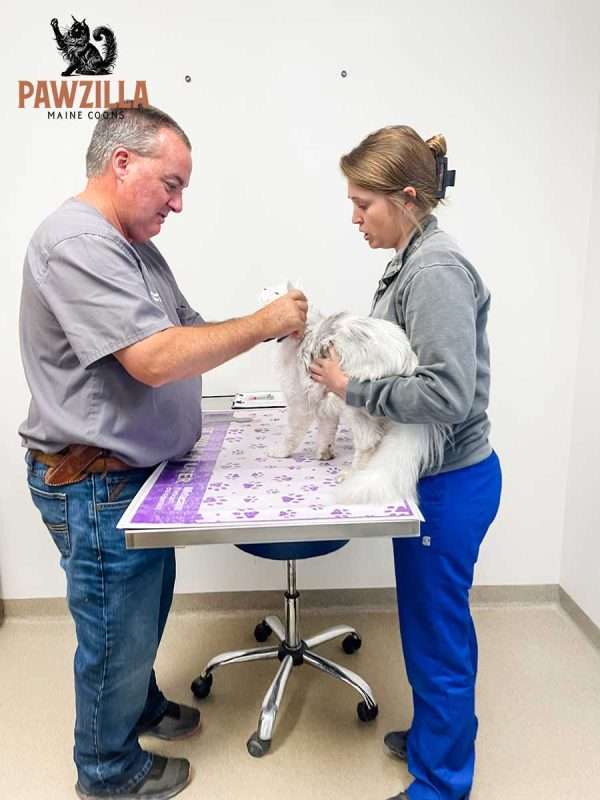
We are fortunate to work closely with Hannah Creek Veterinary Clinic, a veterinary practice we know and trust deeply. Our cats and kittens are seen by Dr. Matt and the rest of the team there, and over time they’ve become a familiar and valued part of our program.
Because we raise multiple animals, English Angora Rabbits and Toy Poodles, and are in and out of the office regularly, the staff knows us well—and more importantly, they know our kittens. Visits are never rushed, and the environment is welcoming and calm, which matters when you’re caring for young animals. It’s not unusual for staff members to step out just to see the kittens we’ve brought in, which speaks to the genuine care and attention they receive while they’re there.
We believe strong veterinary relationships are built on trust, communication, and consistency. Having a team that knows us, our animals, and our standards allows us to work together confidently and ensures our kittens are always seen and cared for by familiar, experienced hands.
Health & Care
Our Health & Care Protocols
Our protocols are designed to support healthy development while avoiding unnecessary intervention, always guided by veterinary insight and individual need.
ROUTINE VETERINARY CARE
Our kittens receive routine wellness examinations with our veterinarian to monitor growth, development, and overall health. Each kitten is assessed individually to ensure they are thriving and ready for the next stage of life before leaving for their new homes.
VACCINATIONS
Vaccinations are administered by our veterinarian and properly documented. Having vaccines handled and given directly through a veterinary clinic ensures correct storage, handling, and recordkeeping, and allows families to continue care seamlessly with their own vet. This extra step helps avoid unnecessary repeat vaccinations and gives families confidence in their kitten’s medical history.
PARASITE SCREENING & DEWORMING
We take a careful, intentional approach to parasite management. Rather than medicating “just in case,” we use fecal testing to see what’s truly needed and treat only when appropriate. It’s an extra step, but one we feel is important for supporting healthy development in growing kittens.
PCR & DIAGNOSTIC TESTING
When appropriate, PCR testing and additional diagnostics are used to help guide informed care decisions. These tools support the overall health of our cats and kittens and provide insight beyond routine examinations.
ONGOING OBSERVATION & HOME CARE
Handled, played with, and interacted with daily, our kittens are closely observed throughout their development. Appetite, activity level, behavior, and overall condition are monitored carefully, allowing us to notice changes early and consult our veterinarian as needed.
Specialized Partnerships Beyond Routine Care
Because our cats originate from established European bloodlines—either born here at Pawzilla Maine Coons or imported directly from Europe—we approach health care with an expanded perspective. Cats coming from other countries may be exposed to pathogens, conditions, or regional concerns that are uncommon or rarely encountered in the United States. As a result, certain health considerations may fall outside the scope of what a typical local veterinary practice sees on a routine basis.
For this reason, we choose to work alongside feline-specific specialists when advanced diagnostics or breed-related concerns require deeper expertise. One of our trusted partners is Noble Manes Clinic & Laboratory, a feline-focused veterinary clinic and laboratory with extensive experience in cat-only medicine and diagnostics. We utilize Noble Manes for the majority of our PCR testing and advanced laboratory work, allowing for informed interpretation that takes both breed and international lineage into account.
These partnerships are not about guarantees or replacing routine veterinary care. They exist to support education, responsible monitoring, and transparency. By collaborating with professionals who specialize exclusively in cats, we are able to look beyond the basics, address concerns that may be unfamiliar in the U.S.

Heart Health
Cardiac Health & Echocardiograms
Heart health is an important consideration in Maine Coons, and thoughtful screening plays a role in responsible, long-term planning.
WHY CARDIAC SCREENING MATTERS
Maine Coons are known to mature slowly and have a higher-than-average risk for certain inherited heart conditions, including hypertrophic cardiomyopathy (HCM). Cardiac screening helps us identify early structural changes that may not yet show symptoms. While no screening can guarantee a kitten will never develop heart disease later in life, regular monitoring allows breeders to make more informed decisions, reduce known risk factors over time, and provide families with transparency and education rather than false assurances.
ECHOCARDIOGRAM SCREENING
Echocardiograms are a specialized ultrasound used to evaluate the structure and function of the heart. We perform echocardiograms on our breeding cats every 24 months, allowing for ongoing monitoring over time rather than relying on a single snapshot.
These exams provide insight beyond what can be detected during a routine physical exam and help guide responsible health and breeding decisions.
IMPORTANT CONTEXT & REALISTIC EXPECTATIONS
While echocardiograms are an important screening tool, they are not guarantees. Certain cardiac conditions, including hypertrophic cardiomyopathy (HCM), can develop later in life—sometimes even in cats that have been regularly screened and previously cleared.
HCM is a complex condition with multiple known and likely unknown variants. Even cats that are DNA tested and do not carry known genetic markers may still develop HCM at some point in their lifetime. For this reason, cardiac health must be viewed as an evolving picture rather than a fixed result.
A RESPONSIBLE, LONG-TERM APPROACH
Our goal with cardiac screening is transparency and informed decision-making. By utilizing echocardiograms regularly and understanding their limitations, we are able to reduce risk where possible, plan responsibly, and provide families with clear, honest information—while recognizing that no screening method can predict the future with absolute certainty.
Genetic DNA Testing
Our genetic testing program helps us understand each cat's unique genetic makeup, allowing us to make informed breeding decisions that promote long-term health. By using DNA insights, we ensure that each kitten we raise is given the best possible start in life.
WHY GENETIC TESTING MATTERS
Genetic DNA testing allows breeders to identify inherited traits and known breed-specific health risks that cannot be detected through physical exams alone. In Maine Coons, certain conditions are linked to specific genetic markers that can be passed from parent to kitten without showing outward signs. By testing our breeding cats, we gain valuable insight into potential risks and can make informed pairing decisions that support long-term health, genetic diversity, and responsible breeding practices.
OUR GENETIC TESTING PARTNER
We use Optimal Selection by Wisdom Panel for genetic DNA testing in our breeding cats. This platform provides comprehensive, science-based screening for breed-relevant conditions and inherited traits. Results are documented, verifiable, and used to guide informed breeding decisions as part of our overall health program.
TRANSPARENCY WITH OUR FAMILIES
Transparency is one of the most important values in our breeding program, and it comes from personal experience. When we first started, we were exactly where many families are today — learning as we went, asking questions, and trusting the information we were given. Unfortunately, that trust was misplaced. We were given incomplete information, important details were withheld, and in some cases we were flat out lied to. The result was heartbreak and hard lessons learned the long way.
That experience changed how we operate — permanently.
Today, we believe transparency is non-negotiable. Genetic testing results for our breeding cats are shared openly and posted on each individual cat’s page. We do not hide results, selectively disclose information, or rely on vague reassurances. Families deserve facts, context, and access to information so they can make informed decisions without fear or guesswork.
We choose this approach because we remember what it felt like to be on the other side — loving the breed, trying to do things right, and trusting that honesty mattered. For us, it always has, and it always will.
BREED SPECIFIC RISKS
Maine Coons are a well-established breed with known genetic patterns. As a result, certain inherited conditions occur more frequently in this breed and can be identified through DNA testing. While comprehensive genetic panels screen for many traits, the following conditions are considered the most relevant and widely recognized for Maine Coons.
Spinal Muscular Atrophy (SMA)
SMA is an inherited neuromuscular condition seen in Maine Coons that affects muscle strength and movement. It is caused by a specific genetic mutation and is inherited recessively, meaning a cat must receive two copies of the gene to be affected. Genetic testing allows breeders to identify carriers and make informed pairing decisions that prevent producing affected kittens.
Hypertrophic Cardiomyopathy (HCM – Genetic Variants)
Hypertrophic cardiomyopathy is the most commonly discussed heart condition in Maine Coons. Certain genetic variants have been identified that are associated with an increased risk of developing HCM. DNA testing can identify whether a cat carries known variants; however, it is important to understand that genetic results do not replace cardiac screening or predict with certainty whether a cat will develop clinical disease. Genetic testing is one tool used alongside echocardiograms to support responsible breeding decisions.
Pyruvate Kinase Deficiency (PK-Def)
PK-Def is an inherited metabolic condition that can affect red blood cell function and lead to anemia. It is inherited recessively and may not cause symptoms in carriers. DNA testing allows breeders to identify affected and carrier cats and avoid pairings that could produce kittens impacted by this condition.
Polycystic Kidney Disease (PKD)
PKD is a genetic condition that causes fluid-filled cysts to develop in the kidneys over time, potentially leading to kidney dysfunction later in life. While less common in Maine Coons than in some other breeds, it remains an important condition to screen for as part of a comprehensive genetic health program.
Beyond These Conditions
Our genetic testing panels also screen for a wide range of additional traits and conditions. While many are rare or not specifically associated with Maine Coons, this broader testing provides a more complete genetic profile and. Genetic testing is used to identify known markers and inherited risks, but it cannot predict every health outcome or replace ongoing veterinary care and monitoring.
Go-Home Health Education
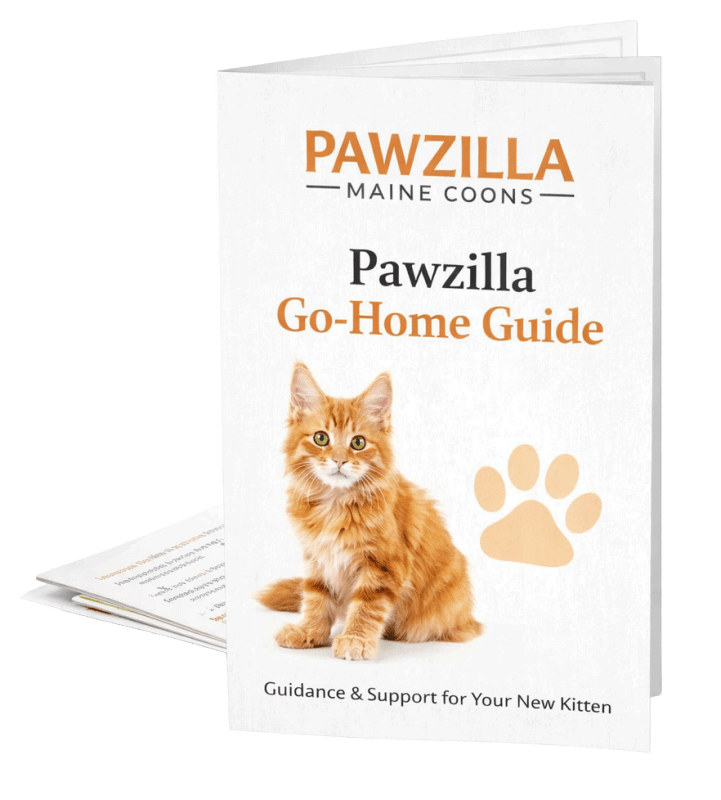
Every Pawzilla kitten goes home with our Pawzilla Go-Home Guide, created to support families beyond pickup day. We know that even the most prepared adopters may think of questions later, or encounter situations they’ve never experienced before. This guide is designed to be a trusted reference you can return to whenever you need it.
The Pawzilla Go-Home Guide includes clear, practical information on health topics such as signs to watch for, when to contact your veterinarian, and common concerns that new kitten owners may encounter. It is not meant to replace veterinary care, but to help families feel informed, confident, and prepared as they transition their kitten into their new home.
Our goal is for families to leave feeling supported — not overwhelmed — with education they can rely on long after their kitten settles in.