Learn About the Maine Coon Cat Breed
We’re excited to help you discover the basics of the Maine Coon cat breed — one of the most beloved and recognizable cats in the world. Whether you’re looking for a gorgeous companion, a potential therapy cat, a show-quality kitten, or just a gentle, playful friend for your home, a European Maine Coon kitten might be the perfect match.
As with any new pet, bringing home a Maine Coon comes with responsibility. At Pawzilla Maine Coons, we raise healthy, pedigreed, and well-socialized European Maine Coons that thrive in family environments. Most of our families tell us how incredibly sweet, playful, and smart their kittens turn out to be — and we believe their temperaments are just as special as their looks.
Our website is packed with helpful info for new and experienced cat lovers alike. We’ve documented our real-world experiences raising Maine Coon cats so we can pass that knowledge on to you. We encourage you to explore and learn what makes this giant, affectionate breed so unique.
The Maine Coon Cat - History and Origin

Maine, USA
The Maine Coon cat is widely known as one of the oldest natural breeds in North America, and it’s even recognized as the official state cat of Maine, USA. While we specialize in European Maine Coons, the breed’s origin story is rooted in American history—though much of it remains a bit of a mystery!
The most popular theory is that Maine Coons descended from long-haired cats brought to New England by European settlers, dating as far back as the 1600s or 1700s. These cats likely served as ship cats, helping control rodents during sea voyages. Some even believe that Vikings or early European sailors may have brought their long-haired cats to North America centuries earlier. Regardless of which version you believe, one thing is certain: the Maine Coon breed was fully established in the U.S. by the 1800s and officially recognized by CFA (Cat Fanciers’ Association) in 1908 as one of their foundation breeds.
Today, Maine Coons are recognized by both CFA and TICA (The International Cat Association), where they’ve earned a global reputation for their giant size, gentle temperament, and striking looks. Whether showing them in CFA and TICA competitions, entering them in 4-H or county fairs, or just enjoying life as a beloved pet, these cats have captured the hearts of families for generations.
What sets Maine Coons apart? Their wild, feral-inspired appearance, giant size, and sweet, dog-like personalities make them truly one of a kind.
Characteristics of the Maine Coon Cat
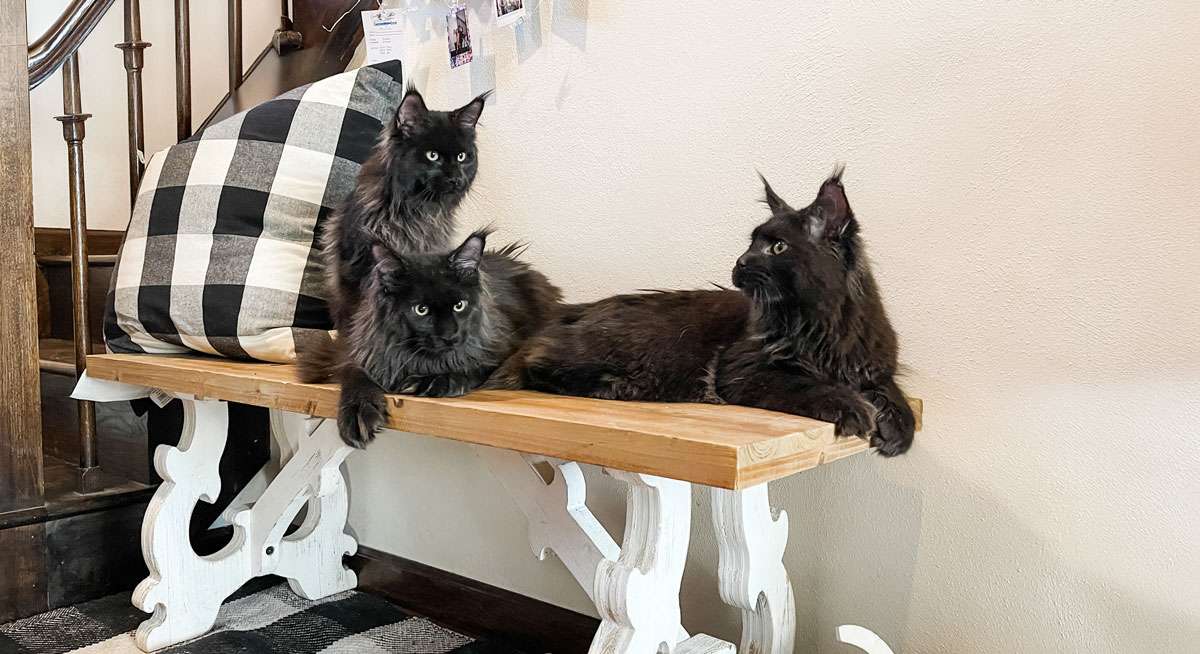
Maine Coon cats are famous for their one-of-a-kind look and irresistible personalities. Often nicknamed “gentle giants” or “little lions,” they’re known for their striking features, large size, and sweet, loyal nature. In fact, many people say they’re the most dog-like breed of cat—and we agree!
They love to follow you around, chirp and talk back, and even play fetch. Yes, really! We’ve had two past kittens that learned to play fetch, and we’ve seen the videos to prove it.
Our litters typically have around five kittens, but we’ve had everything from a single kitten to a whopping fourteen! They are highly intelligent, quick to litter train (every kitten we send home is 100% trained), and they thrive on human interaction. You’ll be amazed at how affectionate and people-focused the Maine Coon breed is. Of course, we’re biased—but we’ve never known a friendlier, more entertaining feline.
Appearance
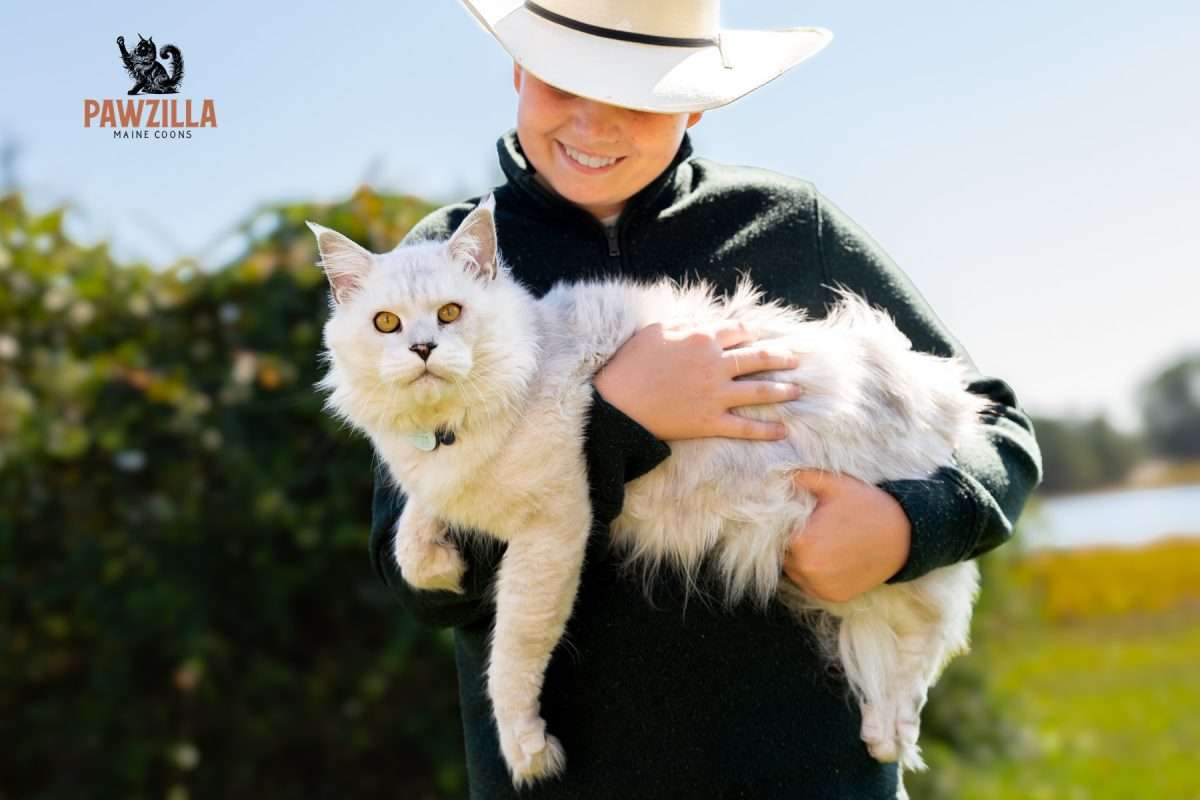
Weighing anywhere from 10 to 30 pounds, Maine Coon cats are known for their impressive size and wild, lion-like appearance. At Pawzilla Maine Coons, each of our kittens is truly unique and becomes a special companion to the family they join.
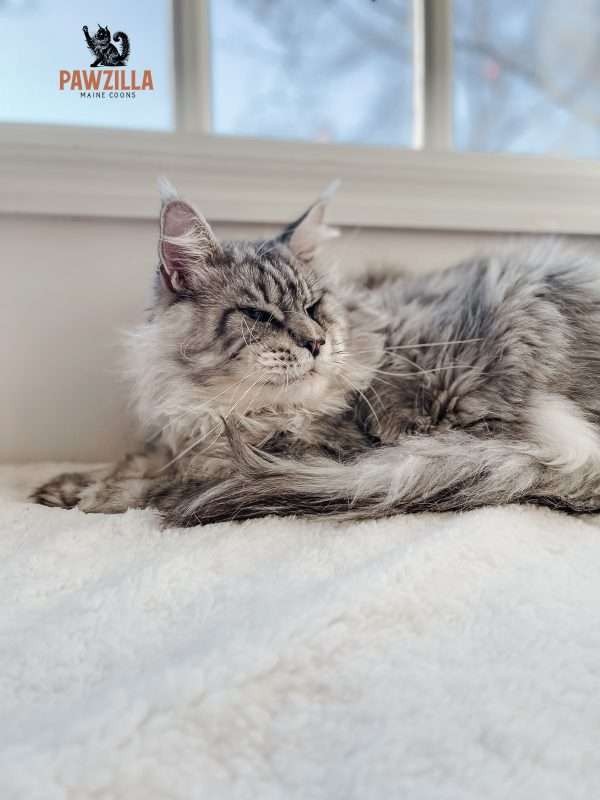
What sets the Maine Coon apart from other breeds is both its size and rugged appearance. These cats resemble miniature mountain lions and are among the largest domestic cat breeds recognized by major cat associations. They feature large, tufted ears, big, sturdy paws, and a long, bushy tail. Their flowing, semi-long coat includes a lion-like mane around the neck, providing natural protection from snow, cold weather, and harsh conditions. Their fur is also water-resistant, which historically helped them thrive in wet, snowy climates.
Maine Coons are slow to mature, often continuing to grow until around five years of age—making them not only large but also long-lasting companions.
To keep their coats healthy and tangle-free, daily brushing is ideal. Most Maine Coons enjoy grooming time and see it as a form of bonding. I also recommend trimming their nails every couple of weeks to keep them comfortable and prevent snagging.
Colors and Coat
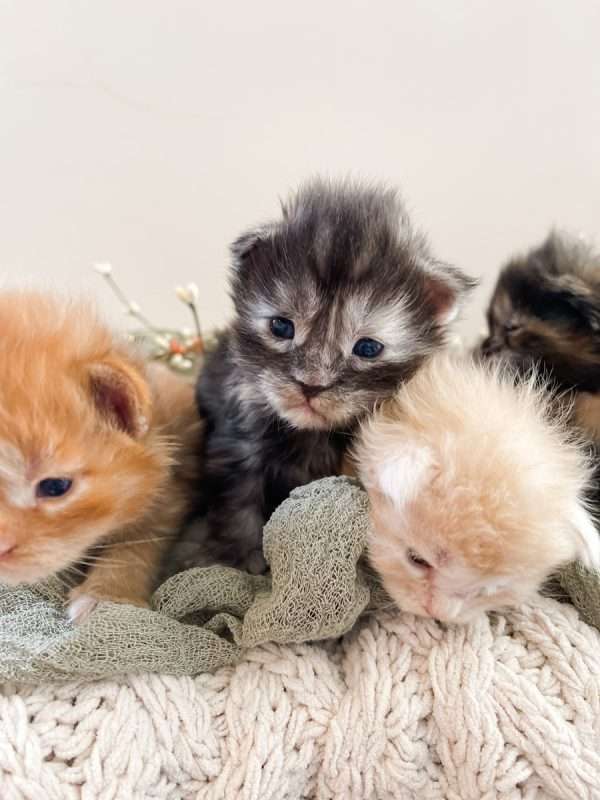
One of the many reasons people fall in love with Maine Coons is their incredible variety of coat colors and even a few eye color variations. These long-haired beauties are known for their luxurious, flowing manes and thick, soft coats. Whether you love a classic tabby, a solid black, a smoky silver, or a rare blue-eyed variation—there’s no “better” color in this breed. Each Maine Coon’s appearance is just the icing on the cake when paired with their charming, dog-like personalities.
Maine Coons are a slow-maturing breed, and their full adult coats often don’t come in until they’re closer to two years old. Expect their beauty—and their fluff—to grow with age!
Despite their big appearance, Maine Coons are relatively low-maintenance when it comes to grooming. A regular brushing routine helps prevent tangles and mats. Nail trims every couple of weeks are also recommended. For extra fluff and shine, some owners choose to give their Maine Coon a bath every month or two and dry them with a fluff dryer—but this is optional. Like most cats, Maine Coons are naturally clean and take good care of themselves.
Temperament
One of the standout traits of the Maine Coon is their remarkable temperament. Known for being gentle, intelligent, and people-oriented, Maine Coons make exceptional companions for families, individuals, and even those who may struggle with social anxiety or need emotional support.
Often called the “dogs of the cat world,” Maine Coons are highly trainable and love to be involved in daily life. Their sweet, loyal nature goes far beyond what many expect from a cat. With consistent affection and care, they’ll return that love tenfold—for years to come.
Our Maine Coon cats are raised in a family environment alongside dogs and even bunnies, and they get along great. Their friendly, adaptable nature makes them one of the most versatile and easygoing cat breeds you can welcome into your home.
How Long Do Maine Coon Cats Live?
A healthy, well-cared-for Maine Coon cat can live anywhere from 12 to 16 years, with some even reaching beyond that. Their long lifespan, combined with their loyal and loving nature, makes them a cherished companion for many years.
Want to help your Maine Coon thrive for as long as possible?
Keep reading to learn how to give them the best care—and make unforgettable memories along the way.
Daily Life
How to Properly Take care of a Maine Coon cat...
When you purchase a Maine Coon kitten from us, we recommend you read the following:
Diet
Acclimating
Grooming
Vet Care
Food and Diet
Your Maine Coon kitten will come home with the same food they were raised on here at our cattery. We recommend continuing with this food—or using it to gradually transition your kitten to a new brand—to avoid upsetting their digestive system.
At Pawzilla, we strongly support a raw feeding diet, as it aligns closely with the natural nutritional needs of Maine Coons. However, we understand that raw feeding isn’t for everyone. If you’re curious about how we feed raw, feel free to contact us for guidance—we’re happy to help you learn more.
Treats should be introduced sparingly until your kitten is fully adjusted to their new home and diet. We recommend sticking with all-natural options such as 100% dehydrated meat treats for the healthiest rewards.
Don’t forget: fresh, clean water should be available at all times. And just a heads-up—Maine Coons are notorious for playing in their water bowls, so you may want to place them on a mat!
Acclimating Your Maine Coon
Bringing your new Maine Coon kitten home is an exciting moment, but it’s important to help them transition slowly and safely. On their first day, avoid giving them free roam of the entire house. Instead, start by confining them to a small, quiet room equipped with all their essentials: food, water, a litter box, a cozy bed, and a few toys.
Your kitten may feel nervous or overwhelmed at first—after all, they’re leaving behind everything familiar. Give them time to adjust at their own pace. Offer affection and interaction, but also respect their need for space.
Once your kitten begins to show signs of comfort—such as seeking you out, purring, and playing—you can gradually expand their access to more areas of your home.
If your kitten has any accidents outside the litter box, simply restart the process by returning them to their safe room for a few days. With consistency, patience, and love, your Maine Coon will quickly settle into their new forever home.
Grooming
Maine Coons are a long-haired breed and benefit from regular grooming. While their kitten coats are shorter and require less maintenance in the first year, it’s important to get them comfortable with brushing early on. This helps establish good grooming habits and prevents future matting.
Focus especially on high-risk tangle zones: the underside, armpits, and around the tail and haunches where the fur tends to be longer and more prone to matting. Aim to brush your Maine Coon several times a week—or daily, if possible—for a healthy, tangle-free coat.
In addition to brushing, nail trimming every two weeks is recommended. This helps avoid accidental scratches and keeps both your kitten and your family comfortable during playtime and cuddles.
Vet Care
Before bringing your Maine Coon kitten home, we recommend that you schedule their first veterinary appointment. Our contract outlines how quickly your kitten must be seen by a licensed vet—typically within the first few days—to keep their health guarantee active.
Your vet visit is more than just a check-up. It ensures your kitten stays on track with their vaccination schedule, allows your vet to get familiar with your pet early on, and prepares you for any future emergencies. This visit also allows you to discuss spay/neuter timing, parasite prevention, and any questions about your kitten’s growth or diet.
Proactive vet care sets your Maine Coon up for a healthy, stress-free transition into their new home and a lifetime of well-being.
